Tooth loss affects people of all ages and backgrounds, and the consequences go beyond an empty space in your smile. Missing teeth can change how you chew, alter speech patterns, and gradually affect the jawbone and facial contours. Modern implant dentistry focuses on restoring more than appearance — it restores reliable function and long-term oral health so patients can eat, speak, and smile without second-guessing each bite.
At Po Dentistry, we approach implant care with the same blend of clinical rigor and patient-centered attention that guides our general dentistry. Implant treatment starts with careful assessment of your oral health and overall goals. From there, we design a treatment plan that fits your anatomy and priorities — aiming for restorations that look natural, feel stable, and require straightforward maintenance.
Because implants replace both the missing tooth and the root beneath it, they preserve the underlying bone and support the neighboring teeth. That root-like function is a key reason implants are widely regarded as the best long-term option for many patients who want a permanent, comfortable solution to tooth loss.

A dental implant is a small, biocompatible post surgically placed into the jaw to serve as an artificial tooth root. Once the implant integrates with the surrounding bone, it becomes a stable anchor for crowns, bridges, or denture restorations. This integration gives implant-supported teeth the resistance and stability that mimic natural teeth during chewing and speaking.
Because the implant transmits functional forces into the bone, it helps maintain bone volume and facial structure in a way that removable options cannot. Patients often notice improved comfort and confidence when their restorations no longer shift or need adhesives to stay in place.
Modern implant materials and surface technologies have improved predictability and long-term success. With good planning, proper hygiene, and routine care, implants can provide decades of reliable service for many patients.
Implants are typically made from titanium or titanium alloys because of their proven compatibility with human bone. The implant body is topped with an abutment — a connector piece — that secures the visible restoration such as a crown or denture. Each component is chosen to match the clinical needs of the case, whether that means a single restored tooth or a full-arch solution.
Successful implant treatment depends on several factors: bone quality and quantity, the position of neighboring teeth, the design of the prosthesis, and the patient’s overall health and oral hygiene. A comprehensive evaluation allows clinicians to sequence the treatment — from any preparatory procedures to implant placement and final prosthesis delivery — in a way that maximizes predictability.
The result is a restoration that not only fills the space but actively participates in the function and health of the mouth, reducing the long-term consequences that untreated tooth loss can cause.
There are several clinical and practical reasons patients choose implants when replacing missing teeth. Unlike removable dentures or conventional bridges, implants integrate with the jaw and act much like natural teeth, offering a level of stability and function that’s difficult to match with other restorations.
Implants also preserve more of the surrounding anatomy. Where conventional bridges require reshaping adjacent healthy teeth to support a replacement, implants are freestanding and do not rely on neighboring teeth for support. This approach helps protect the long-term health of surrounding teeth and bone.
From a daily-use perspective, implant-supported restorations can make eating, speaking, and cleaning easier. Because they do not move under normal function, many patients find they can return to a varied diet and regain confidence in social settings without worrying about slippage or discomfort.
Implant restorations offer dependable chewing efficiency that closely approximates natural dentition. Patients commonly report being able to enjoy a greater variety of foods and having clearer speech compared with traditional removable dentures.
Because implants stimulate the jawbone, they help limit the bone loss that otherwise follows tooth extraction. Preserving bone supports facial contours and can reduce the hollowing or premature aging that sometimes occurs when teeth remain missing for long periods.
Finally, implants eliminate the need for adhesives and reduce the risk of accidental movement, which contributes to a more comfortable and maintenance-friendly long-term outcome.
A predictable implant outcome starts well before the surgical appointment. We begin with a detailed clinical exam and imaging to evaluate bone levels, sinus position, and the relationship of neighboring teeth. This planning phase determines the number, length, and position of implants as well as any preparatory procedures that may be required.
Surgical placement is typically outpatient and performed under local anesthesia with options for sedation when needed. The actual procedure is tailored to the complexity of the case — single-site implants are often quicker, while full-arch reconstructions may require a staged approach. Throughout, careful attention to sterile technique and gentle tissue handling supports healthy healing.
After placement, implants require a period of healing during which they integrate with bone — a process called osseointegration. Once integration is confirmed, the restorative phase begins: connecting the abutments and fabricating durable, esthetic crowns, bridges, or denture attachments that meet the patient’s functional and cosmetic goals.
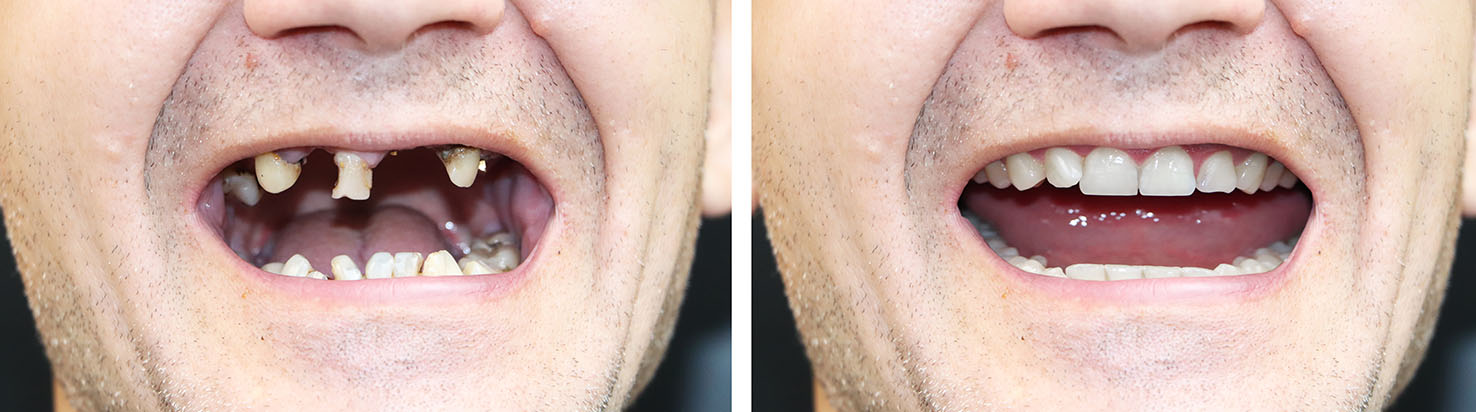
Most patients experience moderate, short-lived discomfort after implant surgery that can be managed with common pain-control measures and simple home care. Swelling and minor bruising are normal in the first few days; clear instructions about oral hygiene and diet help reduce complications and speed recovery.
Regular follow-up visits monitor healing and allow adjustments as needed before the permanent restoration is placed. Once the final prosthesis is in place, routine dental visits and careful home care are essential to protect both the implant and the surrounding natural structures.
With ongoing maintenance, implant restorations are highly predictable and can serve as a long-term foundation for a healthy smile.
Not every patient has the ideal jawbone volume for implant placement right away. Factors such as long-standing tooth loss, periodontal disease, or previous extractions can decrease bone height or width. In those situations, bone grafting or ridge augmentation rebuilds the support needed for a durable implant foundation.
Bone grafts use carefully selected materials to promote new bone growth where it’s needed. When performed before or at the time of implant placement, these procedures expand the range of patients who can benefit from implants and improve the long-term stability of the restoration.
Other adjunctive procedures — such as sinus lifts in the upper jaw or soft-tissue grafting to improve gum architecture — are used when clinical conditions warrant. These interventions are planned selectively to enhance both the function and appearance of the final restoration.
When implants are placed into well-prepared bone and followed by appropriate restorative care, clinical studies show excellent long-term success rates. The combination of careful case selection, modern surgical techniques, and routine maintenance gives many patients a reliable solution that can last for decades.
Decisions about preparatory procedures are individualized. Your clinician will explain the rationale for any grafting or augmentation and how those steps fit into the overall timeline toward your finished smile.
The goal is always a stable, natural-looking result that supports your oral health for years to come.
Implant dentistry is versatile: it can replace a single tooth, support a multi-tooth bridge, stabilize a removable denture, or anchor a full-arch set of fixed teeth. The choice depends on the number of missing teeth, bone availability, aesthetic goals, and lifestyle preferences.
Single-tooth implants restore one missing tooth with a crown that blends with your natural dentition. For spaces involving several missing teeth, implant-supported bridges offer a fixed, durable solution without altering nearby healthy teeth. For patients missing all or most teeth, full-arch implant restorations recreate a permanent smile with excellent function and natural appearance.
In every case, the restorative design is matched to the patient’s unique anatomy and expectations so the final outcome feels integrated with the rest of the mouth.
A single implant topped with a custom crown replaces a lost tooth while preserving adjacent teeth. This approach restores chewing function and esthetics without relying on surrounding teeth for support.
When two or more adjacent teeth are missing, an implant-supported bridge can span the space using strategically placed implants as anchors. This preserves the integrity of neighboring teeth and maintains bone stimulation in the area.
For patients who want a non-removable alternative to dentures, a fixed full-arch restoration uses a small number of implants to support a complete set of replacement teeth. This provides the stability of natural teeth and removes the need for daily denture adhesives.
Implant-retained, removable dentures attach securely to implants for improved comfort and function while still allowing easy removal for cleaning. They can be a practical choice for many patients seeking enhanced retention without a fully fixed prosthesis.
Deciding on implant treatment starts with a thorough evaluation that considers your overall health, dental history, and personal goals. Imaging and clinical assessment reveal what preparatory steps, if any, would make implants a predictable option for you.
At Po Dentistry, we welcome patients from Lancaster and the surrounding communities to explore implant solutions in a straightforward, informative consultation. If you’re considering implants, our team will explain the process, timeline, and clinical reasoning so you can make a confident decision.
Contact us for more information about implant dentistry and to discuss how modern restorations might help you regain comfort, function, and a natural-looking smile.
If you've lost a tooth due to injury, decay, gum disease, or any other reason, we recommend dental implants to replace missing teeth. Dental implants come the closest to replicating the look, feel, and function of your natural teeth.
Dental implants are placed into the jawbone and mirror the same function as the root of a tooth. The procedure for dental implants is usually performed while a patient is sedated. Patients who undergo IV sedation must have an empty stomach and transportation home following the procedure. Most sedation patients will have little to no memory of the procedure occurring.
Generally, dental implants are made out of a biocompatible metal such as titanium. Biocompatible metals are also used for other common bone implants (such as shoulder, hip, and knee replacements). The visible portion of the implant is usually made out of porcelain and is custom-made to match your existing teeth.
Dental implants are designed to fuse to the bone, which makes them become permanent fixtures. Typically speaking, the success rate is nearly 100%. There are few cases in which the implant will not fuse as intended and must be removed. If this happens to occur, the procedure can be attempted again a few months later.
Dental implants are not usually covered by dental insurance, but may be covered under a patient's medical insurance. Our office and your insurance company can discuss coverage options with you based on your individual case and treatment plan.
It's easy... just take care of an implant as if it's a natural tooth! This involves regular brushing, flossing, and dental checkups. If you have any concerns about your implant, contact us immediately.
Dental implants are small, biocompatible posts surgically placed into the jawbone to replace missing tooth roots. Once an implant integrates with the surrounding bone through osseointegration, it provides a stable foundation for a crown, bridge, or denture. This stability restores chewing function and helps preserve normal speech and facial support.
Implants are typically made from titanium or zirconia and are engineered to be long-lasting and corrosion-resistant. After healing, a custom restoration is attached to the implant to recreate the visible portion of the tooth. The combined surgical and restorative approach allows the replacement to mimic both the appearance and function of a natural tooth.
Good candidates for dental implants are adults in generally good health who have sufficient bone volume at the implant site or are willing to undergo preparatory procedures such as bone grafting. Ongoing conditions like uncontrolled diabetes, active periodontal disease, or behaviors such as heavy smoking can affect candidacy and should be discussed during evaluation. A thorough review of medical history and diagnostic imaging helps determine whether implants are an appropriate option.
Age alone is not usually a limiting factor, but pediatric patients whose jaws are still growing are typically not candidates until growth is complete. Patients with well-managed chronic conditions can often receive implants with consultation and coordination of care. The best way to confirm candidacy is a personalized consultation and clinical exam with imaging to assess bone, soft tissues, and bite relationships.
Implant restorations are available in several configurations to address single or multiple missing teeth, including single-tooth crowns, implant-supported bridges, and implant-retained or fixed full-arch prostheses. Single-tooth implants replace an individual tooth without altering adjacent teeth, while implant-supported bridges use implants to support multiple replacement teeth in a row. Full-arch solutions can be fixed or removable and are designed to restore an entire dental arch with greater stability than conventional dentures.
Implant-retained dentures attach to a small number of implants to improve retention and reduce movement during function. Fixed full-arch restorations use a strategic number of implants to support a permanent set of teeth that is not removable by the patient. Your clinician will review the pros and cons of each option and recommend a restorative plan based on oral health, function, and aesthetic goals.
The implant process begins with a comprehensive evaluation that typically includes a clinical exam, dental imaging, and review of medical history to create a tailored treatment plan. Surgical placement involves positioning the implant into the jawbone under controlled conditions, followed by a healing period during which osseointegration occurs. In many cases a temporary restoration can be provided while the implant integrates, with the final crown or prosthesis placed once stability and healing are confirmed.
Procedures may be performed under local anesthesia, and options for sedation or anxiety management are discussed during planning. The exact timeline and number of visits depend on the type and number of implants, any necessary preparatory procedures, and individual healing. Clear preoperative and postoperative instructions help patients prepare for surgery and support an uncomplicated recovery.
Bone grafting is recommended when the jaw lacks sufficient volume or density to support a dental implant at the planned placement site. Bone loss can result from long-term tooth absence, periodontal disease, trauma, or anatomical limitations, and grafting restores the ridge to provide the necessary support for predictable implant stability. Grafting materials and techniques vary and can include autografts, allografts, xenografts, or synthetic materials depending on clinical needs.
In some cases grafting is performed at the time of implant placement, while in others it is staged as a separate procedure to allow for healing before implant surgery. The decision to graft and the chosen technique are based on imaging and the clinician's assessment of long-term functional and aesthetic outcomes. Your treatment plan will outline timing, materials, and expected healing milestones if grafting is recommended.
After implant surgery, it is common to experience mild swelling, bruising, and some discomfort that can be managed with prescribed or over-the-counter medications and cold compresses. Soft foods and careful oral hygiene are recommended during the initial days to promote healing and protect the surgical site. Most patients return to normal activities within a few days, although strenuous exercise should be avoided while initial healing occurs.
Osseointegration typically takes several weeks to a few months, during which the implant fuses with the bone and becomes stable enough to support the final restoration. Follow-up visits are scheduled to monitor healing and to determine the appropriate time for restorative work. Adhering to postoperative instructions and maintaining regular dental appointments help reduce the risk of complications and support predictable outcomes.
Long-term care for dental implants focuses on excellent oral hygiene, including brushing twice daily and daily interdental cleaning around implant restorations to control plaque and prevent peri-implant inflammation. Regular professional cleanings and periodic exams allow the dental team to monitor tissue health, check the condition of restorations, and detect any early signs of problems. Avoiding tobacco and maintaining overall health also supports implant longevity.
Patients with implant restorations may be advised to use specific interdental brushes or floss designed for prosthetic components and to follow any manufacturer recommendations for maintenance. Nightguards or occlusal guards can be recommended for patients who clench or grind to protect implants and restorations from excessive forces. Ongoing communication with your dental provider ensures maintenance protocols are adjusted as needed over time.
As with any surgical procedure, dental implant placement carries potential risks such as infection, bleeding, swelling, and pain, which are typically manageable with proper care and follow-up. Specific implant-related complications can include failure to integrate with the bone, peri-implant mucositis or peri-implantitis, nerve injury with altered sensation, and, in upper jaw cases, sinus involvement if implants extend into the sinus cavity. The overall incidence of major complications is low when implants are planned and placed by trained clinicians using appropriate diagnostics.
Risk is minimized through careful patient selection, diagnostic imaging, sterile surgical technique, and postoperative monitoring. Early intervention for signs of inflammation, strict oral hygiene, and adherence to follow-up schedules reduce the likelihood of long-term problems. Your clinician will discuss individualized risks and how they apply to your clinical situation during the consultation and consent process.
Dental implants support the jawbone by transmitting functional forces that stimulate natural bone maintenance, helping prevent the bone resorption that commonly follows tooth loss. Unlike conventional bridges, implants do not require preparation or crowning of adjacent natural teeth, preserving their structure and reducing the risk of future complications related to those teeth. This preservation of surrounding anatomy contributes to long-term oral health and facial support.
Proper implant placement also maintains occlusal relationships and helps distribute biting forces evenly across the dental arch. However, implants must be planned with attention to spacing, angulation, and occlusion to avoid undue stress on neighboring teeth or restorations. A comprehensive treatment plan considers these factors to protect both the implant and the remaining dentition.
At Po Dentistry, implant treatment begins with a comprehensive consultation that includes a medical and dental history review, clinical examination, and diagnostic imaging to evaluate bone, soft tissues, and bite relationships. The practice emphasizes clear communication about procedural steps, anesthesia and sedation options, preoperative preparation, and postoperative care so patients understand what to expect. Treatment plans are personalized to address functional needs, aesthetic goals, and any preparatory procedures such as extractions or grafting.
The clinical team coordinates surgical and restorative phases to optimize timing and outcomes, and they use contemporary materials and imaging tools to guide precise implant placement. Follow-up and maintenance protocols are established to support long-term success, and the office provides detailed instructions and scheduled reviews throughout the healing and restoration process. This organized, patient-centered approach helps ensure predictable, evidence-based care from evaluation through final restoration.
Our goal is to help every patient experience the benefits of good oral health and a beautiful smile. We value the trust you have placed in our office and strive to provide solutions that meet your dental needs and expectations of care.